Blueprint for Hate

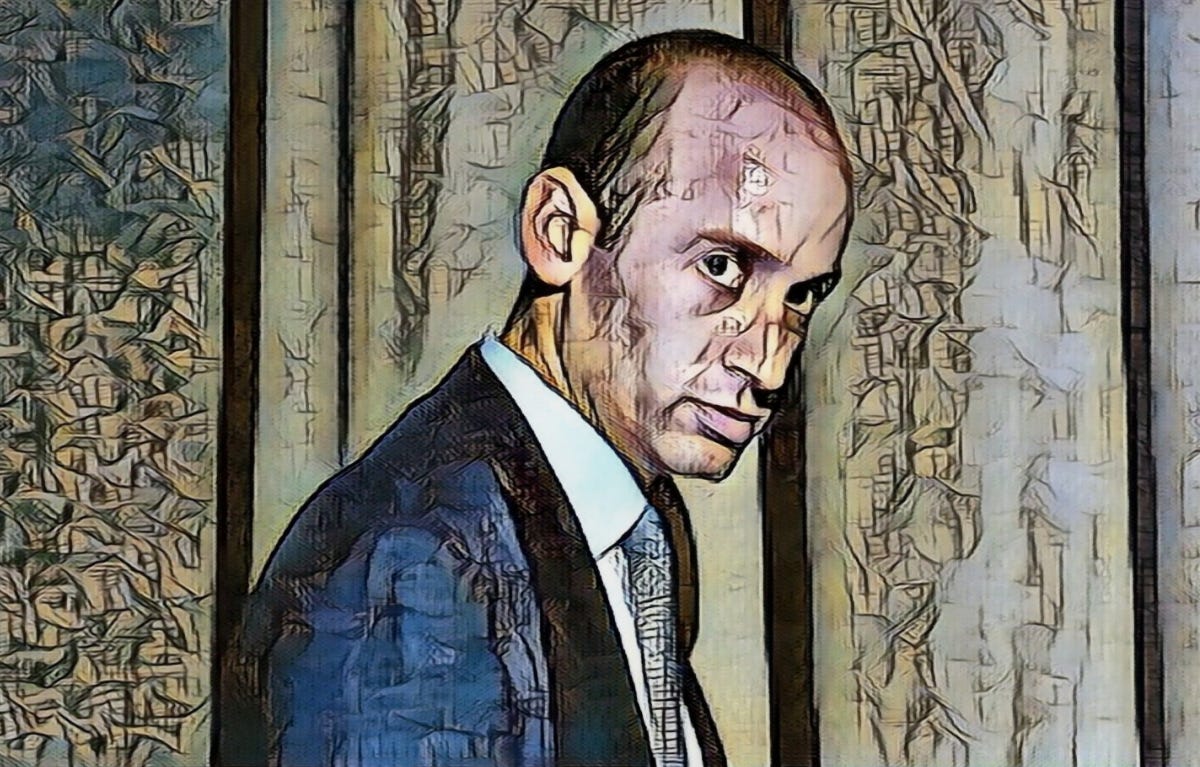
Stephen Miller has never been one for subtlety. From the moment he stepped onto the political stage, he has operated with a singular mission: to reshape America’s immigration system into something colder, harder, and utterly unforgiving. Now, as the White House Deputy Chief of Staff in Donald Trump’s second administration, he has more power than ever to make that vision a reality.
Miller’s story is not one of transformation but of deepening conviction. His hardline nationalism didn’t emerge in Washington—it was already alive and well when he was a teenager in Santa Monica, California, where he honed his talent for provocation. Even in high school, he thrived on antagonism, deliberately setting himself apart from his diverse, liberal classmates. “The conversation was remarkably calm,” recalled childhood friend Jason Islas, who lost Miller’s friendship when Miller declared that he could no longer associate with him because of his Latino heritage. “He expressed hatred for me in a cool, matter-of-fact way.”
His provocations weren’t just verbal. Former classmates recount how he would throw trash on the ground and demand that janitors pick it up, scoffing at those who objected. “Am I the only one here who is sick and tired of being told to pick up my trash when we have plenty of janitors who are paid to do it for us?” he reportedly said. Years later, as he orchestrated the separation of migrant children from their parents at the U.S.-Mexico border, that same sense of calculated cruelty was impossible to ignore.
At Duke University, Miller was not content to merely argue his beliefs—he sought out controversy like a moth to a flame. He defended the Duke lacrosse players accused of sexually assaulting a Black woman, appearing on Fox News to denounce what he called “a disgusting smear campaign.” It was at Duke that he also befriended Richard Spencer, who would later gain infamy as a white nationalist leading Nazi salutes in Washington, D.C. Though Miller later distanced himself from Spencer, their shared ideological foundation was unmistakable.
By the time Miller arrived in Washington, he had perfected the art of political warfare. He quickly found a home in Jeff Sessions’ Senate office, helping to torpedo bipartisan immigration reform efforts with arguments that, even then, echoed white nationalist rhetoric. His admiration for 1920s immigration laws, designed to keep out non-European migrants, was evident in leaked emails where he praised Calvin Coolidge for “shutting down immigration” and encouraged Breitbart News to feature articles from extremist sources. When the Southern Poverty Law Center published those emails, they revealed a man fixated on race, always searching for new ways to frame immigration as an existential threat to white America.
It was this unyielding worldview that made Miller a perfect match for Donald Trump. Unlike most of the political world, Miller saw Trump’s 2015 campaign announcement—the one where he called Mexican immigrants rapists and criminals—as an opportunity rather than a catastrophe. “As soon as I saw it, I said, ‘I have to join his campaign,’” Miller recalled. Within days, he had reached out to Steve Bannon, secured a meeting, and was inside Trump’s orbit.
From that moment on, Miller became the architect of some of the most draconian immigration policies in modern American history. The Muslim travel ban? That was Miller. The policy of separating families at the border? Miller again. The relentless push to make asylum virtually impossible? Miller’s fingerprints were all over it. “No nation can have the policy that whole classes of people are immune from immigration law or enforcement,” he declared, defending the family separation policy in a 2018 interview. “The public wants to see an immigration system that protects American jobs, American wages, and America’s communities.”
The backlash was fierce, but Miller thrived on it. His smirk became a familiar sight on television screens as he dismissed criticism with a blend of contempt and calculated righteousness. When a judge ruled against one of the administration’s immigration orders, Miller scoffed, calling it “patently unlawful” and “an assault on democracy itself.” He had no patience for legal barriers; he saw them as obstacles to be ignored, overridden, or bulldozed entirely.
Even after Trump’s first term ended, Miller refused to fade into the background. He founded America First Legal, a right-wing legal group designed to fight diversity and inclusion initiatives across the country. It was, in essence, a shadow government waiting for Trump’s return. When that moment came in 2024, Miller stepped back into power without missing a beat.
Now, as Trump’s second administration barrels forward, Miller is orchestrating what one official described as “a bloody mass deportation agenda.” He has openly boasted that the operation will be “greater than any national infrastructure project” in U.S. history. The administration has already begun invoking the Alien Enemies Act to justify mass deportations, including efforts to expel Venezuelan nationals to third countries like El Salvador. When a judge tried to halt one of these deportation flights, the administration ignored the ruling, sending the plane into international airspace anyway. “That is not something that a district court judge has any authority whatsoever to interfere with,” Miller said flatly, brushing aside the legal challenge.
To Miller, the law is only useful when it serves his agenda. He has no interest in compromise, no concern for the human cost of his policies. What he does have is a vision—one that is colder, harsher, and fundamentally different from anything America has seen in modern times. He is not just reshaping immigration policy; he is attempting to reshape the very identity of the nation.
Those who have worked with Miller say he is driven by something deeper than politics. His former colleagues describe a man who is single-minded, relentless, and, above all, indifferent to public outrage. “He doesn’t care if people call him racist,” said a former Trump staffer. “In fact, I think he kind of enjoys it. It means he’s getting under their skin.”
There is a reason Miller has lasted while so many others in Trump’s orbit have fallen away. He is not interested in personal glory or fleeting media attention. He is not one of the grifters, cashing in on Trump’s movement for book deals or television contracts. He is in this for the long haul, playing the long game.
And that is what makes him so dangerous.
As the second Trump administration unfolds, Miller’s policies are no longer just campaign rhetoric. They are being written into law, embedded into the bureaucracy, designed to last far beyond Trump’s presidency. While others get distracted by scandals and infighting, Miller remains laser-focused on his goal: an America that is more closed, more controlled, and, in his vision, more “pure.”
For decades, Miller has operated under the radar, dismissed as an aide, a speechwriter, a behind-the-scenes figure. But make no mistake: Stephen Miller is one of the most powerful people in America. And he is just getting started.