Letter To Henry

Henry—
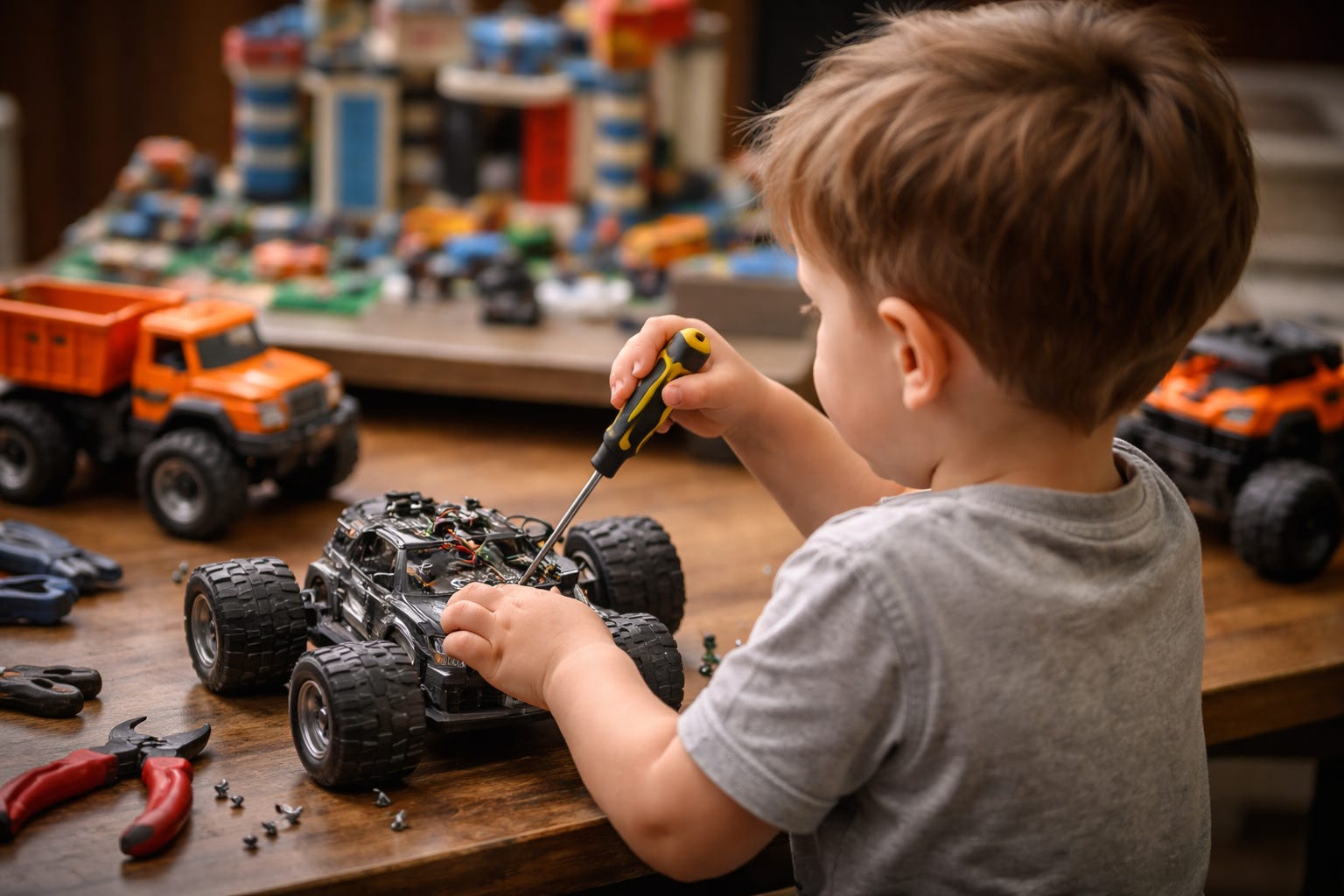
You’re a little guy right now, but you’ve already got a skill that will help you your whole life. You don’t just play with something and move on. You stop, you turn it over, you try to figure out what’s going on inside. If it doesn’t work, you don’t shrug—you try again. You figure out how to fix it.
Not everyone does that.
And it’s going to matter more and more as you get older.
The world you’re growing up into is going to change a lot before you’re grown. By the time you’re old enough to decide what you want to do, a lot of what people are preparing for today will be different, and some of it will be gone. The truth is, nobody really knows what it’s going to look like—not even the people who sound like they do.
So don’t worry too much about having a perfect plan.
What matters more is understanding how things actually work.
Because the world you’ll live in will make it very easy not to ask. Things will just work. You’ll push a button and a car will show up with no driver. You’ll ask a question and get an answer right away. You’ll walk into places where everything adjusts itself—lights, heat, doors—without anyone touching a thing.
Most of the time, it’ll all seem fine. Easy. Good enough.
And that’s where people start to stop thinking. Not because they’re lazy, but because they don’t have to think anymore.
But you won’t. You’ll want to know why.
When something doesn’t quite make sense, don’t let it go. Stay with it a little longer. Look it up. Ask someone. Take it apart if you can—or in your head if you can’t. And when someone gives you an answer, don’t just accept it. Think about it. Turn it around. Ask yourself if it really makes sense.
You don’t have to argue. You just have to understand.
And when you do understand something, see if you can make it better. Fix what’s not working. Make it simpler. Improve it, even just a little. That’s how things get better—because someone decided not to leave them the way they found them.
You’re already doing that now. And it’s a thing that only people do. Not AI. Not automation or robots.
Some day in school you’ll be studying history. Don’t just memorize the dates and names. Ask why they fought. What were they looking for? What were the stories of the people behind the history.
If it’s learning another language, ask yourself what it tells you about the people who speak it. In some languages there are twenty or even thirty words for sand, because it’s spoken by people who live in a desert.
As you get older, the things you work on will get bigger and more complicated. Not just toys—machines, systems, maybe even things you can’t see. But the way you approach them can stay the same.
Thinking this way isn’t always the easiest path. It can slow you down. You might be the one asking questions when everyone else is ready to move on. You might notice problems that other people don’t see or don’t want to deal with.
Just learn where to spend your time. Not every question needs to be chased all the way down. Some things really are good enough. Knowing when to stop matters too. But when something is important, don’t let it go too quickly.
Stay with it longer than most people do.
That’s where understanding comes from.
You don’t need to have all the answers. Nobody does. But if you keep asking good questions and keep trying to understand what’s really going on, you’ll be able to figure things out as you go.
And that’s enough.
So keep asking why. Keep figuring things out. Don’t get too comfortable with easy answers.
Questions are tools.
Use them well.
— Papa
What excellent advice! Thank you for sharing.
henry is really fortunate to have an introspective father like this.
kids today are coddled and babied not only by parents, but by teachers and the general world around them
no need to think
no need to rationalize
al is here
just hope for more fathers like his